
Best Practices
How Embedded Analytics Turns Data Into Products
This week I sat in on a demo with the founder of an industry data publisher. About fifteen minutes in, he said something that stuck with me:
Augmented reality analytics measures how users interact with AR experiences: gaze, dwell, gestures, and spatial movement. Learn the metrics that matter, industry use cases, privacy considerations, and where AR data is heading in 2026.

This week I sat in on a demo with the founder of an industry data publisher. About fifteen minutes in, he said something that stuck with me:
Compare the best augmented analytics tools of 2026. See top vendors, key capabilities, real use cases, and how to choose the right platform for your team.
Business owners are sitting on data they don't know how to use. Their accountants want to help. Something keeps getting in the way.
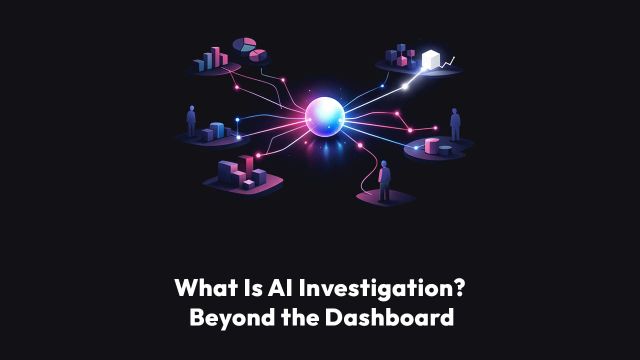
AI investigation is the process of using autonomous AI systems to move beyond surface-level data reporting. Rather than displaying what happened, AI investigation tests multiple hypotheses, identifies root causes, and delivers prescribed actions. It runs without manual prompting, across every locati
An AI powered CRM doesn't just store customer data. It interprets it, learns from it, and acts on it. Traditional CRM is a system of record. AI CRM is a system of intelligence. The gap between the two isn't a feature upgrade. It's a fundamental shift in how customer relationships get managed.
Most companies don't have a data problem. They have a fragmentation problem. The data exists. It lives in your CRM, your ERP, your POS system, your spreadsheets, your regional ops tools. The issue is that none of it talks to the other. Each system understands its own slice of the business, and nobod
Domain AI is artificial intelligence that encodes the specific context, rules, and judgment of a particular business or industry — rather than applying generic reasoning across all use cases. For operations leaders managing dozens or hundreds of locations, domain AI is the gap between AI that answer
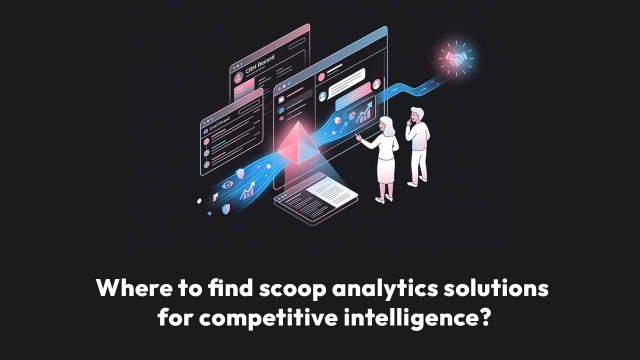
This article is a practical guide for business operations leaders exploring how Scoop Analytics fits into competitive intelligence work. It breaks down the platform's three-product ecosystem — Self-Service, Domain Intelligence, and Embedded Agents — explaining what each one does, where to access it,
Scoop Analytics is an AI-powered business intelligence platform that combines natural language querying, multi-step investigation, machine learning, and automated presentation output — all without requiring SQL, a data team, or weeks of configuration. For business operations leaders who need answers
Scoop Analytics gives marketing and operations teams a faster, more intelligent path from data to decision. By combining AI-powered investigation, time-series snapshotting, and natural language queries, it replaces hours of manual reporting with real-time, explainable insight — without requiring SQL
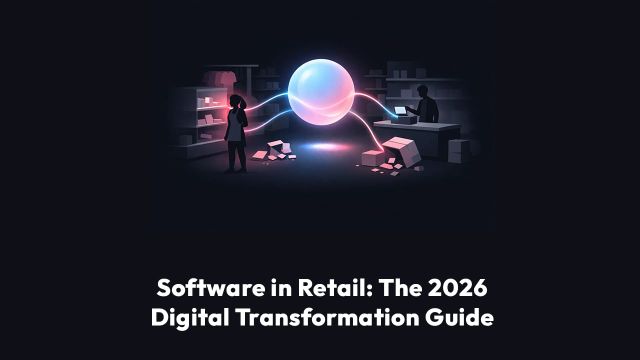
Retail software in 2026 covers everything from point-of-sale systems and inventory platforms to AI-powered analytics engines that investigate store performance autonomously. But the real question isn't which software category to invest in. It's whether the tools you're running can actually explain w
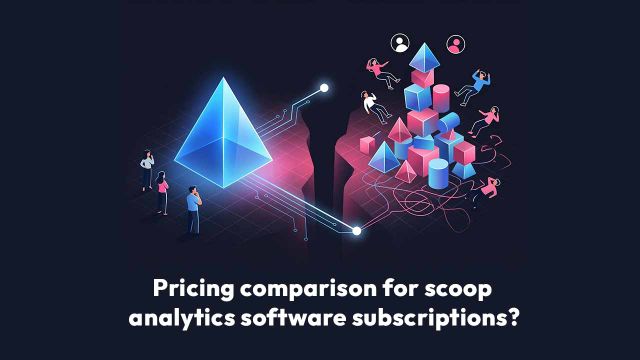
A breakdown of what business operations leaders actually pay for analytics software — from free tools to enterprise platforms — with a direct comparison of Scoop Analytics' pricing against the market, plus a look at the hidden costs (implementation fees, analyst dependency, unused licenses) that nev
If you’re wondering how to use analytics for business growth, this guide shows how to turn data into a weekly decision system—spot changes early, uncover root causes fast, and take actions that compound revenue, retention, and efficiency.
Integrating Scoop Analytics with your CRM software connects your customer data to an AI investigation engine that does more than visualize metrics — it finds patterns, predicts outcomes, and writes ML-scored insights back into the CRM itself. The setup takes minutes. The impact on how your team make
In this article, we explore how the shift toward decision intelligence is solving this "last mile" problem. Discover how autonomous AI investigations are replacing manual data engineering, empowering operations leaders with the plain-English explanations needed to turn raw metrics into immediate, pr
Financial services organizations lose an estimated $485 billion to fraud every year. And yet, most of the conversation in the industry still centers on the same question: how do we catch fraud faster? That's a worthwhile question. But it's not the most important one.
Gross margin tells you how profitably you make your product. Operating margin tells you how profitably you run your business. They measure different layers of financial health — and confusing the two is one of the most common and costly mistakes operations leaders make.